Finding the Perfect Journal for Daily Writing: A Practical Guide
I have been keeping a journal for daily writing for over two decades. In that time I have filled dozens of notebooks, tried every binding style I could find, and learned that the right journal can make the difference between a habit that sticks and one that fades. A journal for daily writing is not just a notebook. It is a tool that shapes how you think, how you record your life, and how you show up to the page every morning.
When I started, I grabbed whatever was cheapest. Spiral notebooks, composition books, the occasional gift journal with a lock and key. They worked, mostly. But over months of daily use, cheap paper started to show its limits. Ink bled through the page. Pages tore out. The spine cracked and the whole thing fell apart in my bag. After enough of that, I started paying attention to what actually held up. That is when I began testing brands like Leuchtturm1917, Moleskine, and Rhodia.
What Makes a Journal Work for Daily Writing
After years of testing, I have settled on a few non-negotiables. The first is paper quality. If you use a fountain pen or a Pigma Micron, you need paper that does not bleed or ghost. Tomoe River Paper is the gold standard here. It is thin enough to keep a journal slim, but coated so that ink sits on the surface rather than soaking through. The Hobonichi Techo uses Tomoe River Paper, and that is one reason it has such a devoted following. But Tomoe River is not the only option. Rhodia uses a coated paper that handles fountain pens beautifully, and Leuchtturm1917 uses a slightly thicker paper that works well for most pens.
The second thing is the binding. A journal for daily writing gets opened and closed hundreds of times. Cheap glue bindings fail. You want a sewn binding, preferably one that lets the journal lay flat. The Midori MD Notebook has a simple, sturdy binding that opens perfectly flat. So does the Leuchtturm1917, which also has numbered pages and an index at the front. Those features sound small, but they matter when you are trying to find an entry from three months ago.
Third, consider the cover. Soft Cover journals are lighter and more flexible. They slip into a bag easily and do not add bulk. The Leuchtturm1917 Soft Cover is a favorite of mine for travel. Hard Cover journals offer more protection. If you toss your journal into a backpack with laptops and water bottles, a hard cover keeps the pages from getting crushed. The Moleskine Classic Hard Cover is a common choice, though its paper has become less fountain-pen-friendly in recent years. I still use it for pencil or ballpoint, but not for wet ink.

The Case for Simplicity
Some journals come with prompts, trackers, or pre-printed layouts. I have tried them. Most end up feeling restrictive after a few weeks. The best journal for daily writing, in my experience, is one that leaves you alone with the page. Blank pages give you total freedom. Grid paper and lined paper offer just enough structure without imposing a system. I prefer grid paper for sketching diagrams or mapping ideas, but lined paper is fine for straight prose. The Baron Fig Confidant uses a dotted grid that works for both writing and drawing. It also has a lay-flat binding and a ribbon bookmark, two small details I have come to appreciate.
The Field Notes brand takes a different approach. Their notebooks are small, rugged, and meant to be carried everywhere. They use a variety of papers, some more fountain-pen-friendly than others. I keep one in my coat pocket for notes on the go. It is not the journal I use for morning pages, but it is the one I reach for when I am out and an idea strikes.
How I Built the Habit
I did not start with a perfect system. I started with a cheap notebook and a promise to write three pages every morning. That practice, known as morning pages, comes from Julia Cameron's book The Artist's Way. It is simple: you write three pages of stream-of-consciousness, longhand, as soon as you wake up. No editing. No judgment. Just getting the thoughts out.
Morning pages are a daily habit, not a literary exercise. They clear the mind. They surface what is actually bothering you. And they train you to keep writing even when you have nothing to say. I have done them for years, and they are the single most effective practice I have found for maintaining a consistent writing life.
The journal you use for morning pages matters more than you might expect. If the paper feels bad under your hand, you will find reasons to skip. If the pen bleeds through and makes the page look messy, you will start to resent the process. I use a Leuchtturm1917 Soft Cover with lined paper for my morning pages. It is big enough to hold a month of entries, light enough to carry, and the paper handles fountain pen ink without bleeding. That combination has kept me coming back day after day for years.
Paper and Pen: A Relationship
Your choice of pen changes how the journal feels. A fountain pen glides across Tomoe River Paper in a way that a ballpoint cannot match. The line is smoother, the ink richer. But fountain pens need good paper. Cheap paper feathers, bleeds, and can even clog the nib. I use a fine-nib fountain pen with waterproof ink for my daily writing. It forces me to slow down a little, which helps me think more clearly.
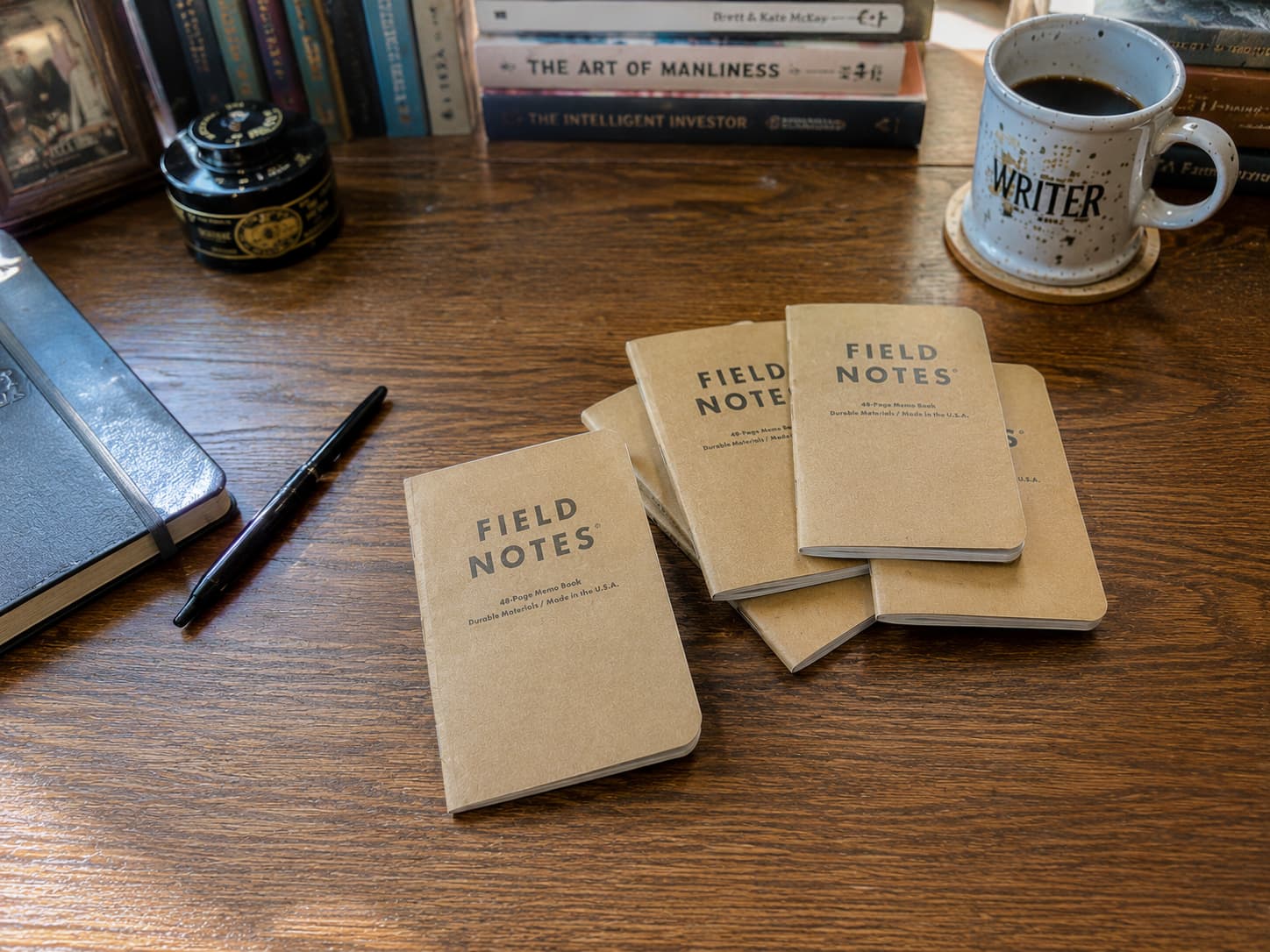
For those who prefer something more portable, the Pigma Micron is a reliable choice. It is a felt-tip pen that produces a consistent line and dries quickly. It works on almost any paper, including the coated stock in a Moleskine or Rhodia. I keep a Pigma Micron in my Field Notes for quick notes, and it never lets me down.
The point is that the pen and the paper need to work together. If one is out of balance, the whole experience suffers. That is why I test new combinations before committing to a journal for daily writing. I write a page or two, check for bleed-through, see how the ink dries, and decide if the feel is right. It sounds fussy, but it saves money and frustration in the long run.
Practical Advice for Choosing Yours
If you are new to daily writing, do not overthink the first journal. Pick one that feels good in your hand and fits your budget. The important thing is to start writing. You can always upgrade later. But if you want a shortlist of journals that have worked for me, here they are:
- Leuchtturm1917: Best all-around. Numbered pages, index, good paper, soft and hard cover options.
- Midori MD Notebook: Minimalist, lays flat, takes fountain pen well.
- Hobonichi Techo: Excellent for daily pages. Thin Tomoe River Paper, dated layout, but still flexible.
- Baron Fig Confidant: Dotted grid, lay-flat binding, ribbon bookmark. Great for mixed use.
- Rhodia Webnotebook: Coated paper, sturdy cover, reliable for any pen.
None of these are perfect for everyone. The Midori MD Notebook has no page numbers, which bothers some people. The Leuchtturm1917 has a higher price point. The Hobonichi Techo is dated, so if you miss a day you have a blank page staring at you. That is fine for some but stressful for others. The point is to know what you need and choose accordingly.
Writing Prompts and the Blank Page
One of the hardest parts of daily writing is facing the blank page. Even after years, some mornings I sit down and have nothing to say. That is when writing prompts help. A simple prompt like "What am I avoiding today?" or "What surprised me yesterday?" can get the words flowing. I keep a list of prompts on the inside cover of my journal. When I am stuck, I pick one and write from there.
The bullet journal method offers another approach. It combines rapid logging, task tracking, and reflection in a single system. I have used bullet journaling on and off for years. It works best when you use it as a tool, not a religion. The key is to adapt it to your own needs. I use a simple weekly spread with space for notes and a daily log. That is enough structure without feeling like homework.
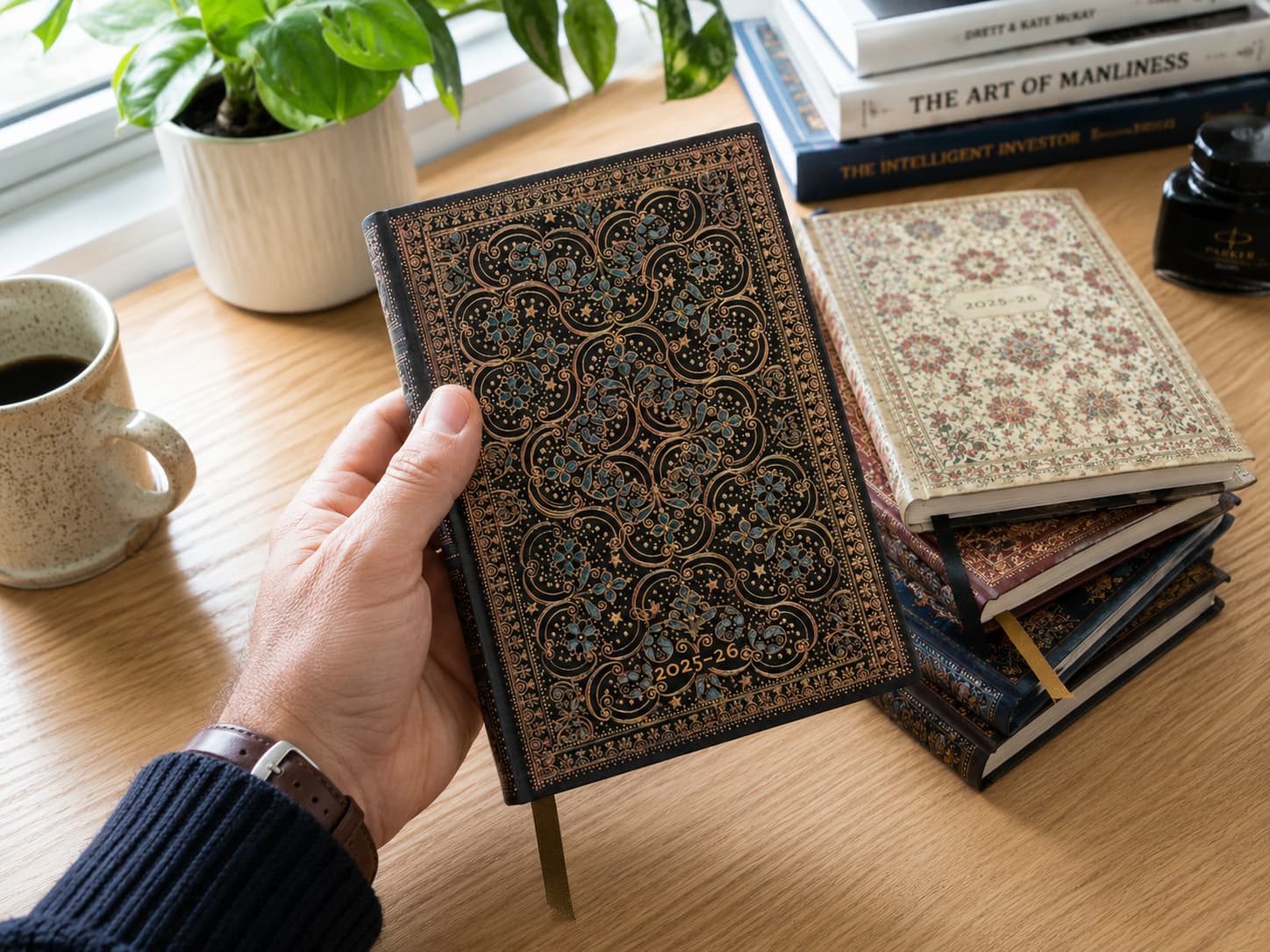
Morning pages are different. They are not about structure. They are about volume and flow. The goal is to fill three pages, no matter what you write. The content is secondary. The act of writing is the point. That is why morning pages and bullet journaling can coexist. They serve different purposes in the same journal.
Why It Matters
I have kept a journal for daily writing through moves, job changes, grief, and joy. The journal itself becomes a record of who you were at each stage. Looking back, I see patterns I missed in the moment. I see how I grew, where I got stuck, and what I actually cared about. That kind of self-knowledge is hard to get any other way.
The right journal supports that process. It does not get in the way. It does not fall apart. It does not make you fight the paper. It just sits there, waiting for you to fill it. That is the goal. Find the journal that disappears into the background so the writing can take center stage. For me, that has been a combination of good paper, a reliable pen, and the discipline to show up every day. The tools change over time, but the habit remains.